
Nepal is one of Asia’s most diverse travel destinations, offering sacred heritage sites, Himalayan landscapes, wildlife-rich jungles, and warm local hospitality. For first-time travelers, discovering the best places to visit in Nepal ensures an unforgettable journey through culture, nature, and adventure
The ideal introduction to Nepal combines cultural immersion, scenic relaxation, light adventure, and optional trekking. This guide covers Nepal’s must-visit destinations for first-time visitors, expanding beyond the Golden Triangle to ensure no essential place is missed.
Kathmandu Valley – One of the Best Places to Visit in Nepal
The Kathmandu Valley is the natural starting point for almost every trip to Nepal. Home to the capital city and several ancient kingdoms, the valley offers the highest concentration of UNESCO World Heritage Sites in the country.
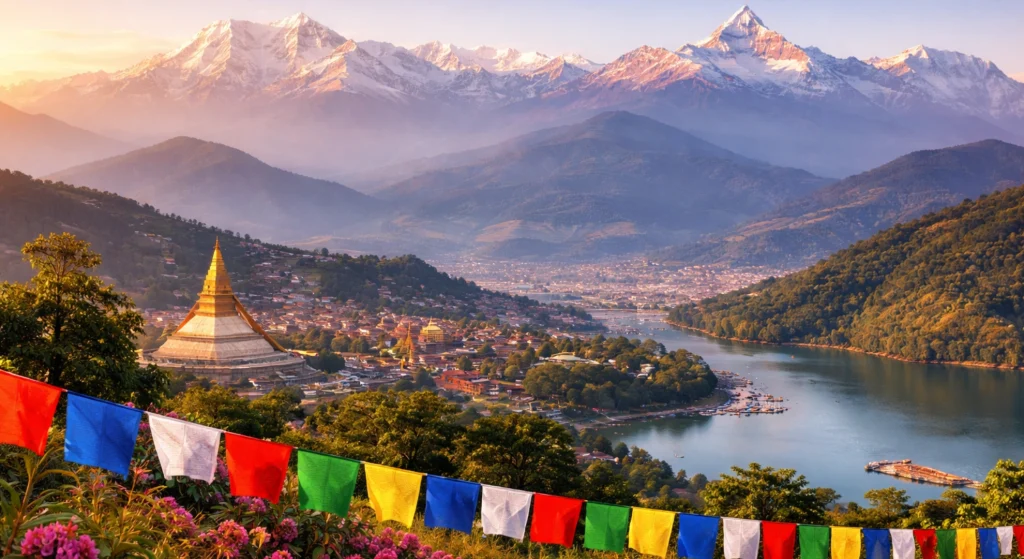
Why Kathmandu Valley Is Ideal for First-Time Visitors
- International airport access
- Dense cultural and historical attractions
- Well-developed tourist facilities
- Short travel distances between sites
Key Highlights
Kathmandu Durbar Square
Kathmandu Durbar Square, also called Basantapur Durbar, is a historic palace complex and a UNESCO World Heritage Site. Renowned for its detailed wood carvings and centuries-old architecture, the square reflects Nepal’s royal and cultural heritage.
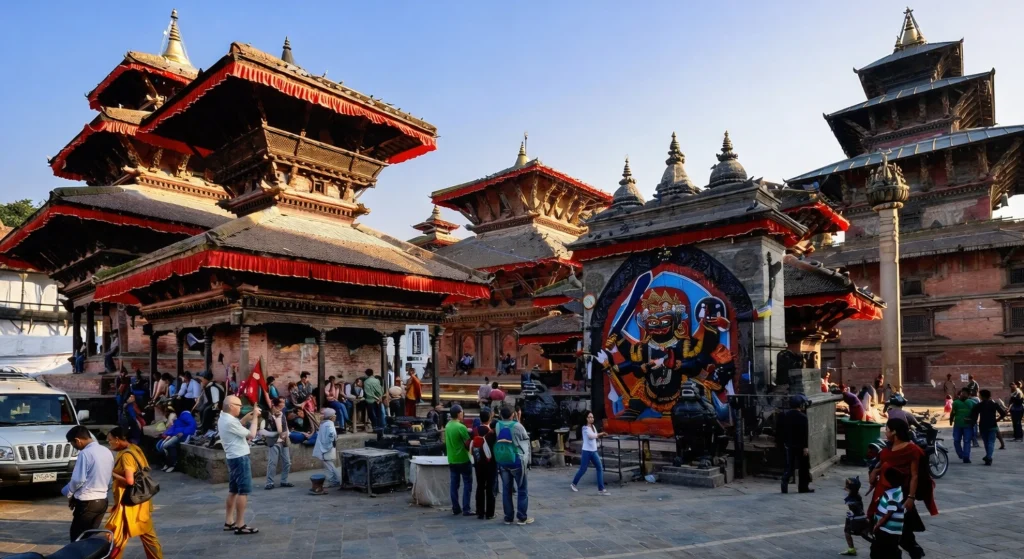
The original palace was established during the Licchavi era and later expanded extensively in the 17th century under King Pratap Malla. Today, the area contains a remarkable collection of palaces, courtyards, and more than 50 temples, earning it the nickname “the Museum of Temples.”
Visitors can explore sacred sites such as the Taleju Bhawani Temple and Kumari Ghar. First-time travelers can read our Nepal Travel Guide for First-Time Visitors 2026 for tips on navigating the valley efficiently.
Swayambhunath Stupa
Swayambhunath Stupa is one of the oldest and most sacred religious sites in the Kathmandu Valley, rising above the city on a forested hill. Its white dome and golden spire can be seen from across the valley, symbolizing enlightenment and spiritual awakening.
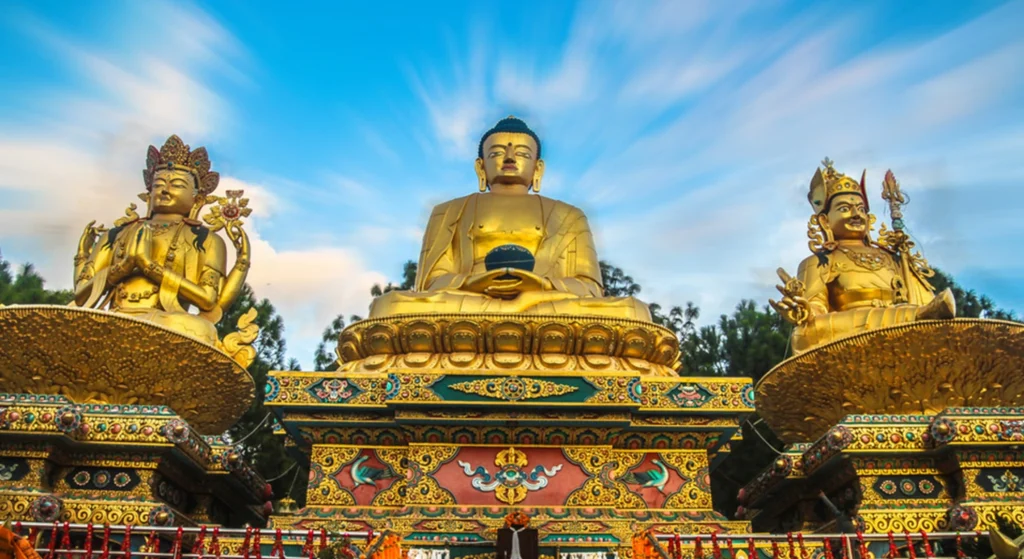
Historical inscriptions confirm that Swayambhunath was an important Buddhist pilgrimage site as early as the 5th century, though its origins are believed to predate Buddhism itself. According to ancient legends recorded in the Swayambhu Purana, the site emerged from a radiant lotus that once bloomed in a lake covering the Kathmandu Valley.
The bodhisattva Manjushri is said to have drained the lake to make the sacred site accessible, transforming the lotus into the hill on which the stupa now stands. Today, Swayambhunath remains a powerful symbol of faith for both Buddhists and Hindus and a must-visit landmark for first-time travelers.
Boudhanath Stupa
Boudhanath Stupa, located northeast of Kathmandu, is one of the world’s largest and most sacred Buddhist monuments. Its white dome and golden spire symbolize Buddhist cosmology, spiritual wisdom, and the path to enlightenment, with the Buddha’s all-seeing eyes watching over the city.
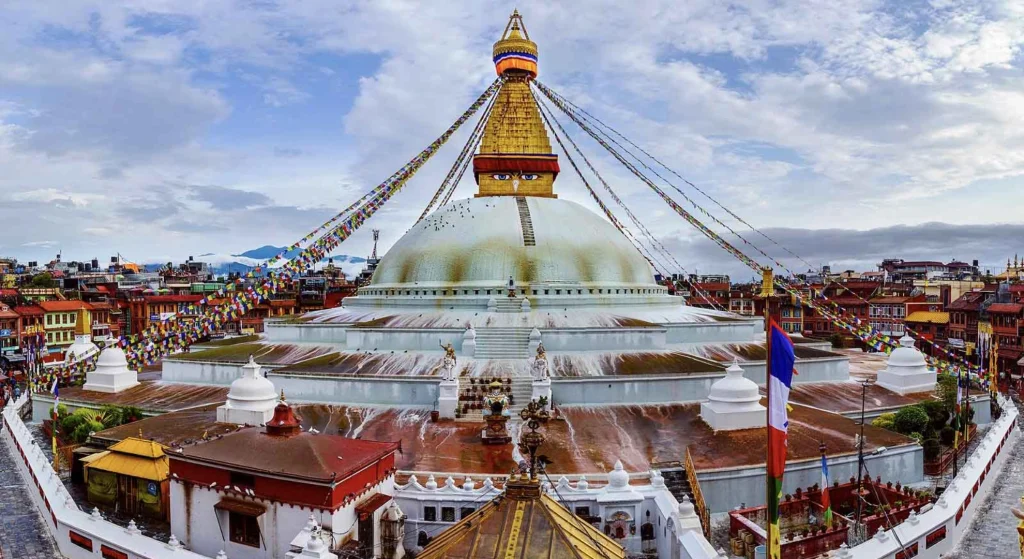
Dating back to the Licchavi period, the stupa lies on an ancient trade route between Tibet and India and is believed to enshrine relics of Kassapa Buddha. After 1959, Tibetan refugees turned the area into a major center of Tibetan Buddhism, now home to dozens of monasteries.
Recognized as a UNESCO World Heritage Site, Boudhanath remains a vibrant place of pilgrimage, especially during festivals like Losar and Saga Dawa, when rituals, prayer, and circumambulation fill the site with spiritual life.
Pashupatinath Temple
Pashupatinath Temple is one of the most sacred Hindu temples, dedicated to Shiva in his form as Pashupati. Situated on the banks of the holy Bagmati River in Kathmandu, it is among the oldest and most important religious sites in South Asia. Recognized as a UNESCO World Heritage Site since 1979, the temple complex spans around 246 hectares and includes the main pagoda-style shrine along with hundreds of smaller temples, ashrams, and sacred monuments.
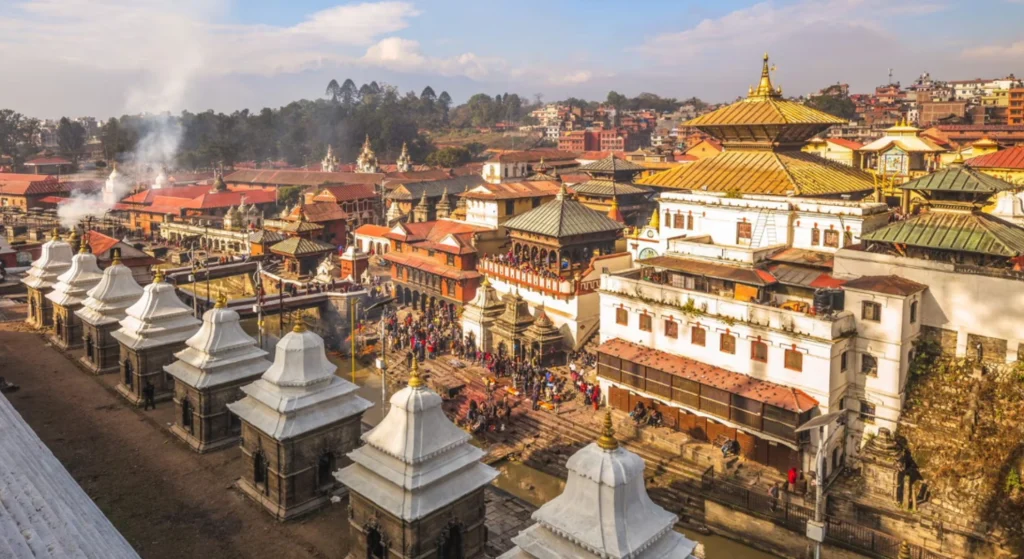
Revered as one of the holiest abodes of Shiva, Pashupatinath is frequently mentioned in ancient Hindu scriptures such as the Skanda Purana and Shiva Purana. The sacred linga is believed to fulfill devotees’ wishes, making the temple a major pilgrimage destination. Deeply rooted in mythology and tradition, the temple maintains centuries-old rituals led by Vedic Brahmin priests, preserving its spiritual and cultural significance to this day.
Bhaktapur – Nepal’s Best-Preserved Medieval City
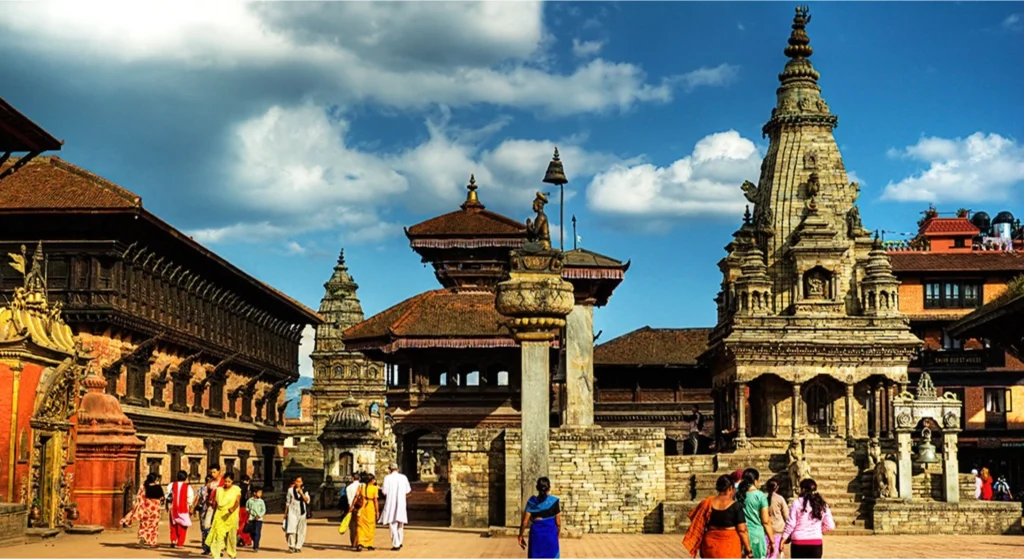
Bhaktapur is a tranquil city with a rich cultural heritage, contrasting the bustling streets of Kathmandu. Known for its well-preserved medieval architecture, traditional squares, and artisan workshops, Bhaktapur showcases centuries-old Newar culture. Visitors can explore historic temples, vibrant pottery and craft markets, and taste local delicacies like king curd and juju dhau. The city’s timeless charm makes it feel like a living museum of Nepalese history.
What Makes Bhaktapur Special
- Traffic-free historic squares
- Living Newari culture and traditions
- Artisan workshops and pottery squares
Key Attractions
- Nyatapola Temple, Nepal’s tallest pagoda-style temple
- The Palace of Fifty-Five Windows
- Traditional pottery making in Pottery Square
- Famous local delicacy: Juju Dhau (King Yogurt)
Bhaktapur is perfect for first-time travelers who want to experience Nepal’s past without modern distractions.
Nagarkot – Himalayan Views Without Trekking
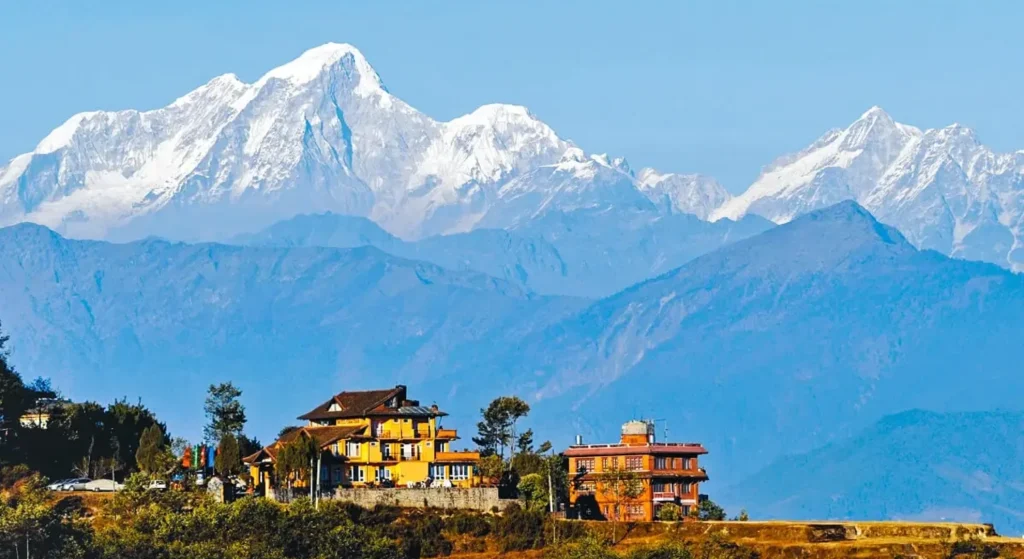
Nagarkot, situated on the eastern rim of the Kathmandu Valley, is famed for its stunning panoramic views of the Himalayas, including Mount Everest on clear days. Renowned as a peaceful hill station, Nagarkot provides breathtaking sunrises and sunsets over the snow-capped peaks, making it a favorite spot for photographers and nature lovers. The area is dotted with forested trails, local villages, and viewpoints that allow visitors to immerse themselves in Nepal’s natural beauty and serene mountain landscapes.
Why Visit Nagarkot
- Spectacular sunrise and sunset views
- Clear-day visibility of Himalayan ranges, including Everest
- Easy access from Kathmandu (1–1.5 hours)
- Short walking trails and scenic resorts
Pokhara – One of the Best Places to Visit in Nepal for Nature and Adventure
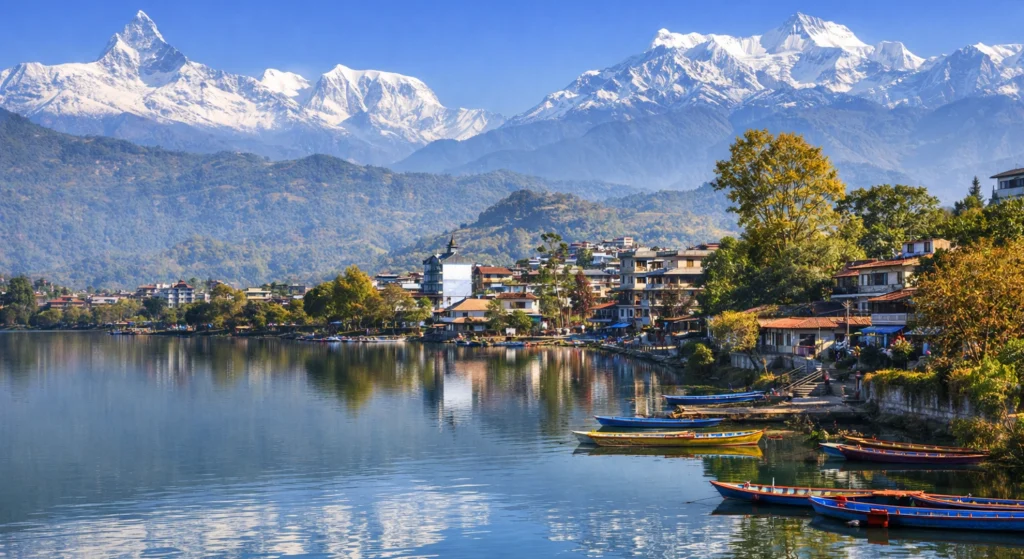
Pokhara is one of Nepal’s most accessible and beginner-friendly destinations. Nestled beside serene lakes like Phewa Lake and framed by the majestic Annapurna Range, the city combines natural beauty with a relaxed, laid-back atmosphere. Visitors can enjoy boating, lakeside cafes, and panoramic mountain views, along with adventure activities such as paragliding and trekking. Pokhara’s blend of stunning scenery, peaceful vibe, and easy accessibility makes it ideal for travelers of all experience levels.
Natural Attractions
Phewa Lake
A tranquil lake ideal for boating, lakeside dining, and sunset views.
Sarangkot
A famous viewpoint for sunrise over the Annapurna and Dhaulagiri ranges and a global paragliding hotspot.
World Peace Pagoda
A hilltop monument offering panoramic views of the lake, city, and mountains.
Adventure Activities
- aragliding
- Zip-lining
- Bungee jumping
- Ultralight mountain flights
Annapurna Region – The Best Trekking Area for Beginners
Annapurna Region is Nepal’s most accessible trekking area, ideal for beginners. It offers diverse trails, stunning mountain views, and rich cultural experiences, making it perfect for first-time trekkers seeking adventure in the Himalayas.
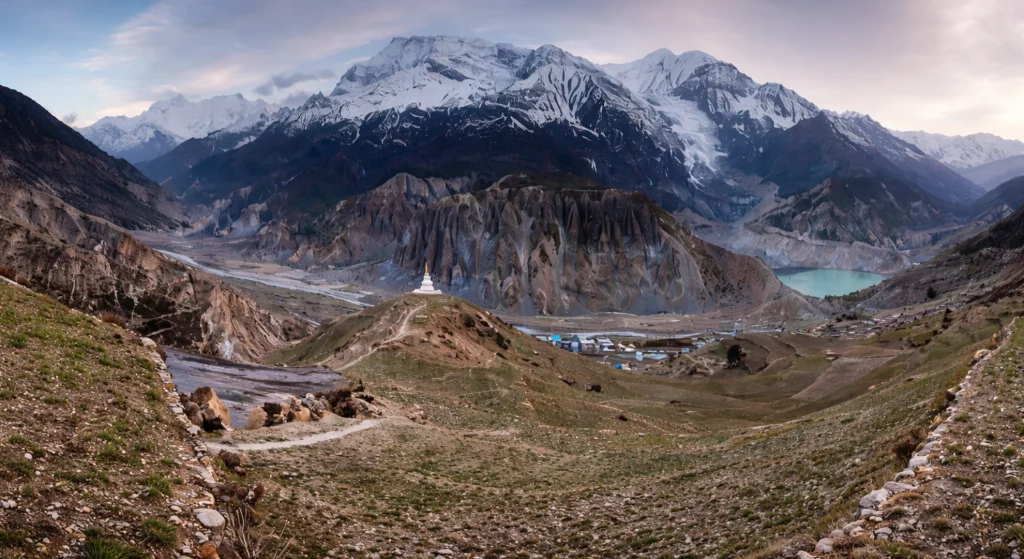
Why It’s Beginner-Friendly
- Well-marked trails
- Extensive teahouse accommodation
- Moderate altitudes compared to other regions
Popular Beginner Treks
- Ghorepani Poon Hill
- Australian Camp & Dhampus
- Annapurna Base Camp
Everest Base Camp – A Bucket-List Journey for First-Timers
Everest Base Camp is one of the world’s most iconic trekking destinations, attracting adventurers from around the globe. The trek passes through traditional Sherpa villages, ancient monasteries, and stunning landscapes filled with rhododendron forests, glaciers, and high Himalayan peaks. Along the way, trekkers can enjoy breathtaking views of Mount Everest, Lhotse, and Ama Dablam, making it a truly once-in-a-lifetime experience. Everest Base Camp is not only a physical challenge but also a journey through Sherpa culture, offering unforgettable encounters, teahouse hospitality, and the awe-inspiring beauty of the Himalayas.
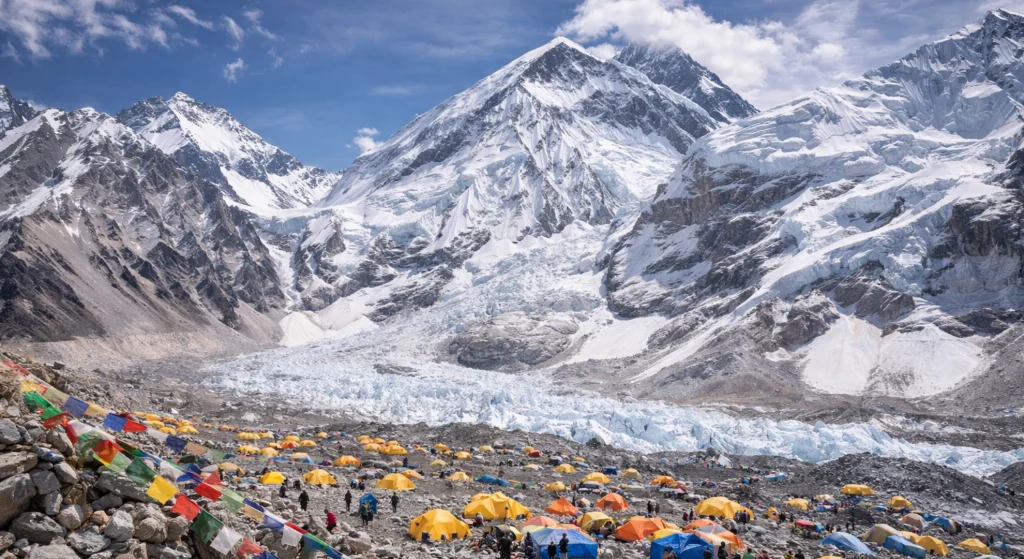
Why It’s Possible
- Well-established trekking infrastructure
- Gradual acclimatization schedules
- Experienced guides and porter services
- Comfortable teahouses throughout the route
While physically demanding, thousands of first-time trekkers successfully complete this journey every year.
Chitwan National Park – Wildlife and Jungle Safaris
Chitwan National Park, located in southern Nepal, provides a striking contrast to the country’s mountainous regions. Famous for its dense jungles, the park is home to endangered species like the one-horned rhinoceros, Bengal tiger, and various exotic birds. Visitors can enjoy wildlife safaris, canoeing along the Rapti River, and guided nature walks, experiencing Nepal’s rich biodiversity up close. With its blend of adventure and wildlife, Chitwan offers a unique tropical escape from the Himalayan landscapes.
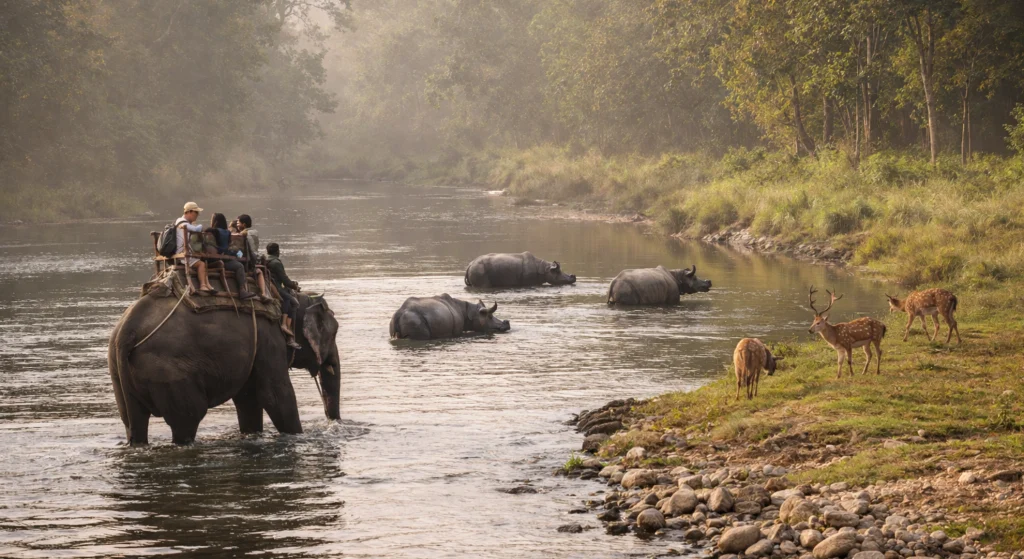
What to Expect
- Jeep safaris through subtropical jungle
- Canoe rides on the Rapti River
- One-horned rhinoceros, deer, crocodiles, and birdlife
- Cultural experiences with the indigenous Tharu community
Lumbini – Birthplace of Lord Buddha
Lumbini is the sacred birthplace of Lord Buddha and one of the world’s most important spiritual destinations. The site features ancient monasteries, the Maya Devi Temple, meditation gardens, and sacred ponds, reflecting centuries of Buddhist heritage. Pilgrims and visitors from around the globe come to Lumbini to experience its serene atmosphere, learn about Buddhist teachings, and witness rituals that honor the life of Buddha.
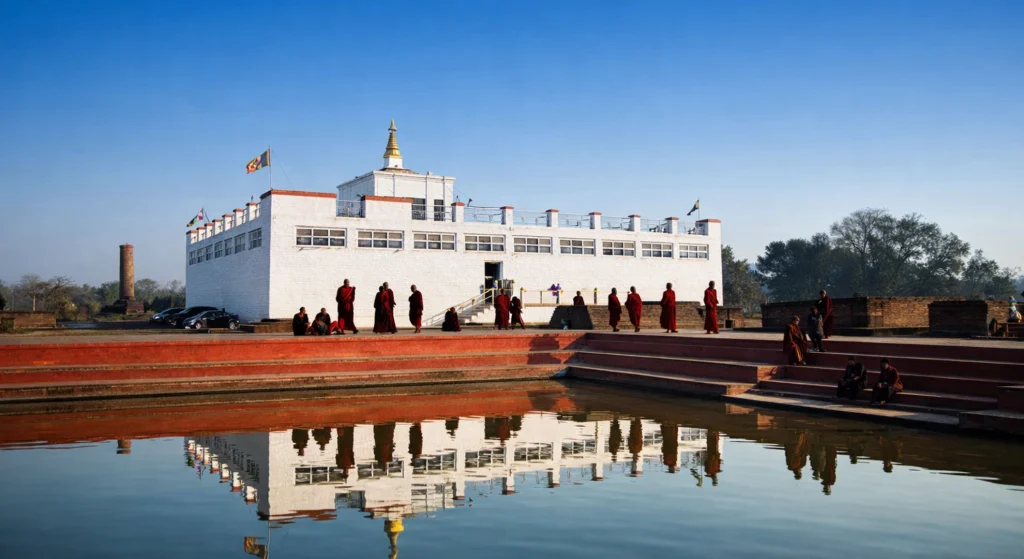
Key Highlights
- Maya Devi Temple (exact birthplace of Buddha)
- Ashoka Pillar dating back to 249 BCE
- International monasteries built by Buddhist nations
Best Time to Visit Nepal for First-Time Travelers (2026)
- Spring (March–May): Rhododendron blooms, mild temperatures
- Autumn (October–November): Clear skies and the best mountain visibility
These seasons are ideal for sightseeing, trekking, and wildlife safaris.
Why Nepal Is Perfect for First-Time Travelers
- Compact geography with diverse experiences
- Friendly locals and strong hospitality culture
- Reliable tourist transport and accommodation
- Activities suitable for all ages and fitness levels
Final Thoughts
For first-time travelers, Nepal offers an unmatched balance of culture, nature, adventure, wildlife, and spirituality. From the heritage sites of the Kathmandu Valley to the lakes of Pokhara, the jungles of Chitwan, and the towering peaks of the Himalayas, Nepal delivers a complete and deeply rewarding travel experience.
FAQs
What are the must-visit places in Nepal?
Kathmandu Valley, Pokhara, Chitwan, Nagarkot, Lumbini, Annapurna Region, Everest Base Camp.
How to travel between Kathmandu, Pokhara, and Chitwan?
By domestic flights, tourist buses, or private cars.
Top 10 Places to Visit in Nepal
Include Kathmandu, Bhaktapur, Pokhara, Chitwan, Lumbini, Nagarkot, Everest Base Camp, Annapurna Region, Pashupatinath, and Swayambhunath.
Top 5 Places to Visit in Nepal
Condensed list for short trips; focus on Kathmandu Valley, Pokhara, Chitwan, Lumbini, Nagarkot.
Best Natural Place to Visit in Kathmandu
Nagarkot, Shivapuri National Park, Phulchowki, Godavari Botanical Garden.
What is Kathmandu Durbar Square?
Historic royal palace complex with palaces, courtyards, 50+ temples, and handicraft shops.
How long should I spend sightseeing in Kathmandu?
1–2 days for major sites; 2–3 days for a relaxed, in-depth experience.


