
Nepal offers an unforgettable blend of Himalayan scenery, ancient culture, and budget-friendly travel. In 2026, Nepal remains one of the best destinations for beginners, offering safe tourism infrastructure, easy visas, and a wide range of experiences, from cultural sightseeing to beginner-friendly trekking.
This Nepal travel guide for first-time visitors 2026 will help you plan your trip with confidence, covering the best time to visit, visas, money, safety, food, and must-see destinations.
The best time to experience Nepal is during autumn (September to November) or spring (March to May), when the weather is stable, skies are clear, and landscapes are at their most beautiful.
A two-week Nepal itinerary is ideal for first-time visitors and typically includes cultural sightseeing in Kathmandu, scenic relaxation in Pokhara, and a beginner-friendly trek such as Poon Hill or Annapurna Base Camp.
Tourist visas are available on arrival at Tribhuvan International Airport, and while cards are accepted in major cities, carrying Nepalese Rupees (NPR) in cash is essential, especially outside urban areas.
Best Time to Visit Nepal – Nepal Travel Guide 2026
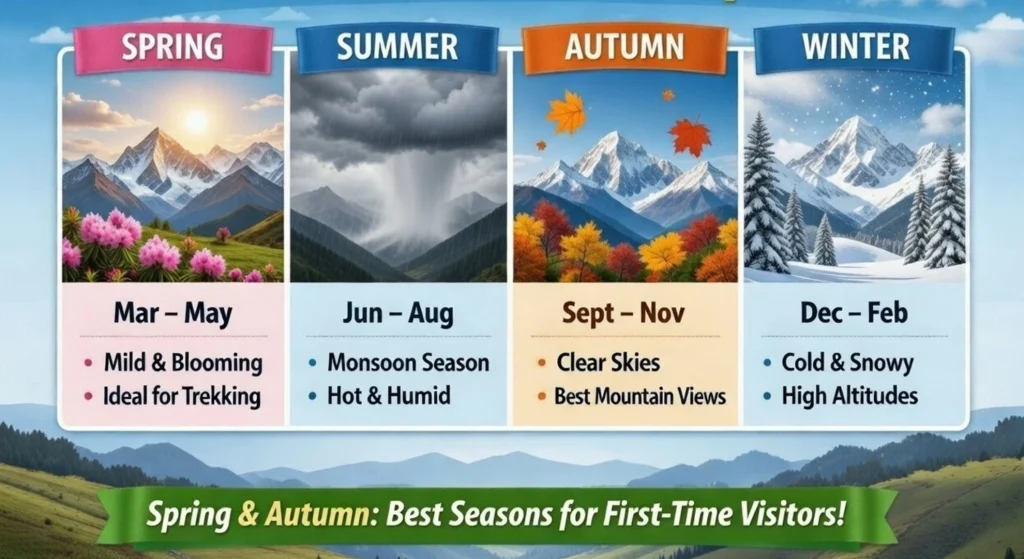
The most comfortable and rewarding seasons for beginners are:
- September to November: Clear skies, excellent mountain views, ideal for trekking
- March to May: Pleasant temperatures and blooming rhododendron forests
Avoid monsoon months (June–August) unless you are experienced or visiting only cities.
Nepal Visa Information (Nepal Travel Guide 2026)
Most travelers can obtain a Visa on Arrival at Tribhuvan International Airport if they meet entry requirements.
For official visa rules, check the Nepal Department of Immigration website:
- Passport must be valid for at least six months
- Visa fees depend on length of stay
- Payment is usually accepted in major foreign currencies
Currency & Money
Nepal primarily operates on cash.
- Use Nepalese Rupees (NPR) for daily expenses
- ATMs are common in Kathmandu and Pokhara
- Cash access is limited in trekking regions
Always carry small denominations for local transport and meals.
Internet & SIM Cards
Staying connected is easy in cities.
- Buy a local SIM card at the airport or in city centers
- Ncell and Nepal Telecom offer the best coverage
- Internet speed decreases in rural and mountain areas
Getting Around Nepal
Transportation in Nepal is affordable but slow.
- Taxis and ride-sharing apps like inDrive operate in cities
- Tourist buses are comfortable for intercity travel
- Domestic flights connect major destinations but may face weather delays
Health & Altitude Awareness
Nepal is safe health-wise, but basic precautions are important.
- Drink only bottled or purified water
- Carry basic medicines
- Acclimatize slowly during high-altitude travel
- Never ignore symptoms of altitude sickness
Cultural Etiquette
Nepalese culture values respect and modesty.
- Dress conservatively, especially at temples
- Remove shoes before entering homes and religious places
- Use your right hand when eating or giving items
- Ask permission before photographing people
Top Beginner-Friendly Experiences in Nepal
Kathmandu Valley Highlights
Explore UNESCO World Heritage Sites such as:
- Boudhanath Stupa
- Pashupatinath Temple
- Bhaktapur Durbar Square
Easy Treks for Beginners (3–7 Days)
Perfect if it’s your first time trekking:
- Poon Hill Trek
- Dhampus Village Trek
- Nagarkot to Dhulikhel hike
Pokhara Experiences
Pokhara is ideal for relaxation and light adventure.
- Boating on Phewa Lake
- Sunrise views from Sarangkot
- Paragliding with Himalayan backdrops
- Visiting the World Peace Pagoda
Adventure Activities
For those seeking adrenaline:
- White-water rafting on the Trishuli River
- Bungee jumping and zip-lining
- Short canyoning experiences
What to Pack for Nepal (First-Time Travelers)
- Layered clothing (weather changes quickly)
- Comfortable walking shoes or hiking boots
- Reusable water bottle + purification tablets
- Power bank (power cuts can occur)
- Sunscreen, sunglasses, and a hat
Budget & Safety Tips – Nepal Travel Guide 2026
One of the biggest advantages of traveling to Nepal is that it offers incredible value for money while remaining a generally safe destination for international visitors. With the right planning and basic precautions, first-time travelers can comfortably explore Nepal on a modest budget without compromising on experiences.
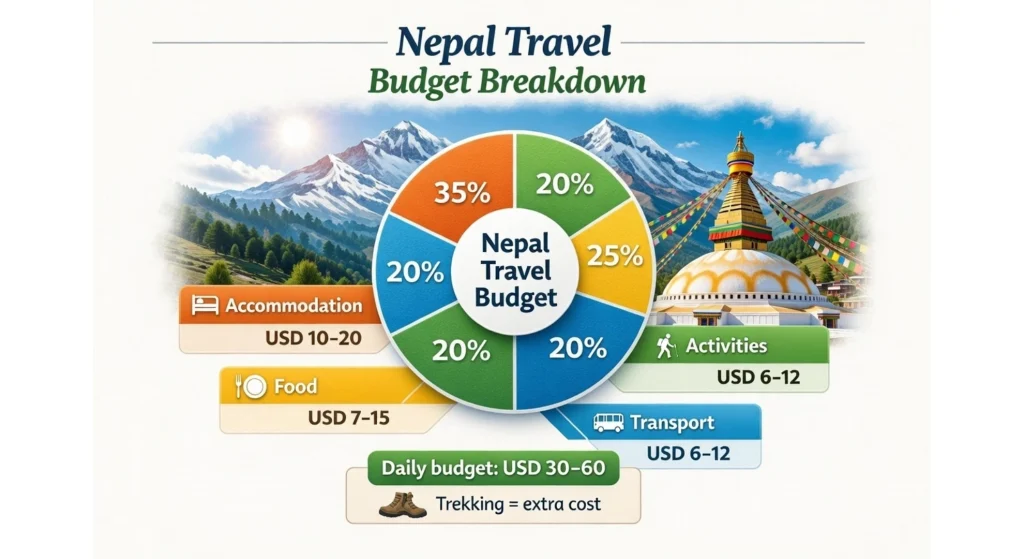
Daily Budget in Nepal
Nepal is widely regarded as one of the most budget-friendly countries in Asia, especially for travelers who are comfortable with simple accommodations and local food.
Budget Travelers (USD 30–60 per day)
A daily budget of USD 30–60 is realistic for budget-conscious travelers and covers most essential expenses.
What This Budget Includes
Accommodation
- Budget guesthouses and hostels: USD 10–25 per night
- Clean but basic rooms with private or shared bathrooms
- Wi-Fi is usually available, though speeds can be slow
Food
- Local meals: USD 2–4 per meal
- Tourist restaurants: USD 5–8 per meal
- Street food and local eateries are affordable and filling
Transportation
- Local buses and microbuses: very cheap
- Tourist buses between cities: USD 8–15
- Short taxi rides within cities: affordable with negotiation
Other Daily Costs
- Entry fees to cultural sites
- Bottled water or water refills
- SIM card data top-ups
This budget is ideal for travelers staying in cities like Kathmandu and Pokhara, and for those doing short, beginner-friendly treks.
Mid-Range & Trekking Costs
- Mid-range travelers: USD 60–100 per day
- Trekking costs vary depending on:
- Permits
- Guide/porter fees
- Trek duration and route
It is important to budget separately for trekking permits and guides, as these are not included in normal daily expenses.
Money Tips for Nepal
- Cash is king in Nepal, especially outside major cities
- Always carry small denominations
- ATMs are reliable in cities but rare in mountain regions
- Inform your bank before traveling to avoid card blocks
Safety in Nepal
Nepal is considered a safe destination for tourists, including solo travelers and first-time international visitors.
General Safety
- Violent crime against tourists is extremely rare
- Petty theft can occur in crowded areas like markets and buses
- Scams are uncommon but bargaining is normal
Traffic & Road Safety
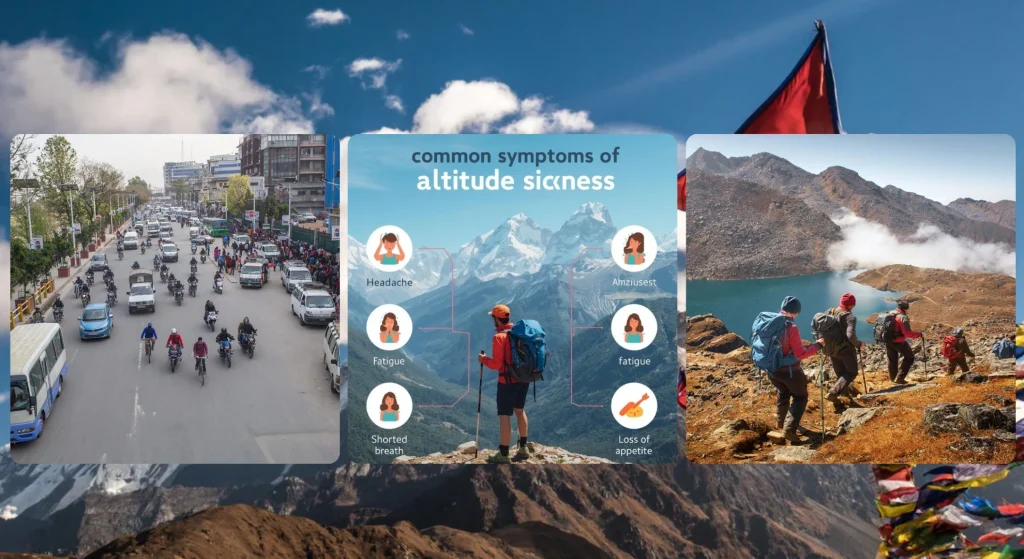
Traffic is the biggest safety concern in Nepal.
- Roads can be narrow and poorly maintained
- Traffic rules are loosely enforced
- Pedestrians should be extra cautious when crossing roads
Trekking Safety
Trekking is safe when done responsibly.
- Always trek with registered guides in mountain regions
- Do not trek alone in remote areas
- Acclimatize slowly to avoid altitude sickness
- Follow local advice regarding weather and routes
Health & Medical Safety
- Drink only bottled or purified water
- Avoid raw vegetables unless washed with safe water
- Carry basic medicines and personal prescriptions
- Pharmacies are common in cities
Food to Try in Nepal
Nepali food is simple, nutritious, and well-suited for travelers. Meals are generally cooked fresh and use mild spices compared to other South Asian cuisines.
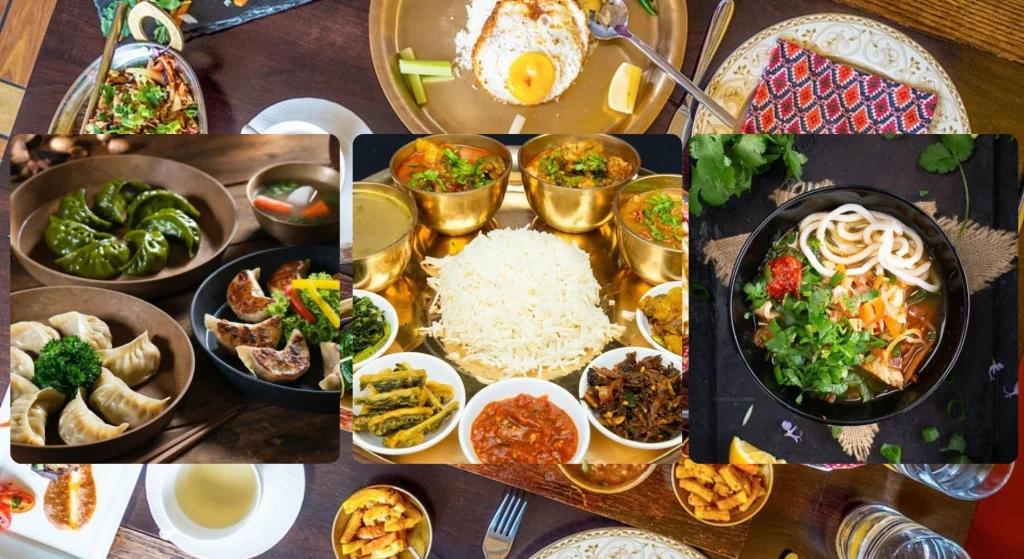
Dal Bhat – The National Staple
Dal Bhat is the most common and trusted meal in Nepal.
What it includes
- Steamed rice (bhat)
- Lentil soup (dal)
- Seasonal vegetables
- Pickles (achar)
Why travelers love it
- Extremely filling
- Healthy and balanced
- Often comes with free refills
Momos – Nepalese Dumplings
Momos are one of the most popular foods in Nepal.
Types
- Steamed momos (most common)
- Fried momos
- Buff, chicken, or vegetable fillings
Where to try
- Local momo shops
- Cafes in tourist areas
- Street-side eateries (choose busy stalls)
Thukpa – Warm Noodle Soup
Thukpa is a comforting noodle soup influenced by Tibetan cuisine.
Why it’s popular
- Warm and filling
- Ideal in cold weather or at higher altitudes
- Easier to digest than heavy meals
Food Safety Tips for First-Time Visitors
- Eat at busy restaurants with high turnover
- Avoid unfiltered tap water
- Wash or sanitize hands before meals
- Start with mild foods during the first few days
Nepalese food is generally safe, and most travelers do not experience serious issues when following basic precautions.
Final Note for First-Time Visitors
This Nepal Travel Guide 2026 is ideal for travelers visiting Nepal for the first time and planning a safe, well-balanced trip. Nepal remains a rewarding and beginner-friendly destination in 2026 when approached with preparation and flexibility. By understanding basic logistics, budgeting realistically, respecting local culture, and traveling at a relaxed pace, first-time visitors can enjoy a smooth, safe, and truly unforgettable experience in Nepal.
FAQs
Is Nepal good for first-time travelers?
Yes, Nepal is affordable, friendly, and beginner-friendly with good tourist infrastructure.
Do I need a visa to visit Nepal?
Yes, most nationalities can get a Visa on Arrival at Kathmandu airport.
Best time to visit Nepal?
September–November and March–May are the best seasons.
How much money do I need per day in Nepal?
Budget travelers need USD 30–60 per day.
Can I visit Nepal without trekking?
Yes, Nepal offers culture, food, wildlife, and nature beyond trekking.
Do I need a guide for trekking?
Guides are strongly recommended, especially in mountain regions.
Is altitude sickness common?
Yes, above 2,500 meters-acclimatize slowly and stay hydrated.
Do people speak English in Nepal?
Yes, English is widely spoken in tourist areas.
What currency is used in Nepal?
Nepalese Rupee (NPR); cash is essential.


